One stop online portal for Delhi informatiom. Know what is happening around you. Read news analysis on Indian Politics, current affairs, travel, sports, and much more.
The deadly disease is creating havoc across the globe with almost all the countries in the world have reported the Corona infection. It was first identified in Wuhan China and took little over two months to spread across the globe.
India too has been fighting the Corona Virus with over 215 reported cases as on 19th March 2020. The government of India has taken a lot of measures to control the spread of Covid-19. It has put visa restrictions and stopped operating flights to the infected countries.
The government has been doing vigorous awareness campaigns to make sure people of the country are protected from the deadly virus. Even WHO is closely monitoring the situation and in constant touch with various governments, experts and health organizations to help the countries where the resources are limited.
The Corona outbreak has also infected the economies and financial markets around the world. The companies and workers all over are worried about the anticipated financial losses. The Bombay Stock Exchange was hovering around 28000 on March 19, way below the 41,952 peaks that it touched in Mid January just 2 months ago.
The Indian Rupee is also struggling against the US Dollar. On March 19, 2020, it just slipped below the 75 mark due to corona scare.
The Short Term and Long Term Economic Impact of Corona Virus
Certainly, there is going to be a significant impact of Covid-19 in the near future. The businesses across the globe have already suffered considerable losses. The stock markets of all the major economies including USA, UK, China, India, have crashed and the investments have dried due to the impact of Corona.
China, the world’s largest exporter is expecting a significant economic slowdown in 2020. China is one of the biggest trade partners of India and the Chinese slowdown will have an impact on the Indian economy as well. India imports 45% of its electronic items from China, apart from the major chink of chemicals. Indian Pharma industry is dependent on raw materials from China. Most of the top selling Mobiles come from China. The Indian imports will have an impact due to the current slowdown due to Covid-19.
Similarly, when it comes to exports, China is one of the biggest partners of India. The slowdown in China means less export from India resulting in a slowdown in India as well.
However, it is too early to predict the long-term implication of the Corona Virus disease. India is a big country with a large population and huge consumer spending. Once the virus is under control and the confidence of the public is restored it won’t take much time to revive.
Therefore economists are of the opinion that the impact may last long but there may be a slowdown in the GDP growth in many sectors.
Who will take care of Daily wagers and people who are losing Businesses?
In his address to the nation on March 19, 20202, The Prime Minister Narendra Modi requested the countrymen to not cut the pay of domestic help and others who can’t work from home. PM Modi also appealed to the Business community to refrain from deducting salaries of the employees during this period of Corona scare.
“Please understand that they too have to run their families”
The daily wagers, small vendors, contractual workers and many others like them are the most vulnerable when the cities are locked down. How are they going to make both ends meet? Here are some steps that the government can take to help the affected population
Tax relief to the small companies and MSME’s
Unemployment bonus for the workers who have lost the jobs during this period
Stipend to the daily wagers who are unable to get work, and to the small vendors who have to shut shop due to lockdown
Waiving of fees of the kids for few months
Offering loans at low interest rates to the companies to stand again.
There are some steps that the government of India has already taken like compensating the companies for employees’ leaves. Directly transferring the amount to the accounts of the poor and free medical treatment.
The meaningful steps by the governments will definitely help in keeping the local businesses afloat. It will also help the most impacted and mitigate the economic impact of Covid-19 outbreak.
The steps will help revive the economy once we are free from this virus.
Responsibility of the citizens
It is very important for the citizens of the country to cooperate with the government in controlling the pandemic. Many states of India are now impacted with Covid-19, the citizens need to be careful and informed. Everyone should follow the advisories issued by the health department, government of India and doctors.
The PM has urged the nation to observe a Janta Curfew on March 22, 2020 to fight Corona Virus outbreak in India. The PM is getting support from all quarters for the Janta Curfew. Celebrities like Akshay Kumar, Ajay Devdan and Amitabh Bachan have come out in support of it.
Janta Curfew will be observed on March 22, between 7 AM and 9 PM. “During this curfew, we shall neither leave our homes nor get onto the streets or roam about our localities. Only those associated with emergency and essential services will leave home,” the PM said. The fight against Covid-19 is a joint responsibility of the government and the citizens of the country. The community leaders, political leaders, companies and other influencers should contribute to reduce the spread of Corona Virus.
The Business community in particular should implement the government advisory. The employees who have travelled to the countries where corona is widely spread should be asked to stay quarantined. The sick employees should be asked to stay at home. Wherever possible the employees need to be encouraged to work from home. The companies need to follow flexible timings and can also work in shifts to avoid large crowds.
Above all, following a proper respiratory etiquette and hand hygiene is very important for all of us.
The Covid-19 Pandemic forced the G20 countries to unite and convene a Virtual G20 Leaders' Summit on March 26, 2020. The main agenda was to discuss the challenges posed by the outbreak of the COVID-19 pandemic and to forge a global coordinated response. PM Modi brought to notice the impact of the pandemic on the economy. However, he also highlighted the importance of human capital.
The G20 Background
The G20, or the Group of Twenty, comprising 19 countries and the European Union, is the premier forum for international economic cooperation. The G20 consists of both developed and developing countries from every continent , and it intends to bring their leaders together.
More importantly, the G20 group shares 80 per cent of world GDP, and the world's 60 per cent population resides in G20 countries.
The 19 countries include India, Indonesia, Brazil, Argentina, Australia, Canada, China, Germany, France, Italy, Turkey, Japan, Mexico, the Russian Federation, South Africa, Saudi Arabia, South Korea, the UK and the US. This year the G20 Summit is scheduled to be held between 21–22 November 2020 in the Saudi Arabian capital city of Riyadh.
G20 on Covid-19 – March 26, 2020
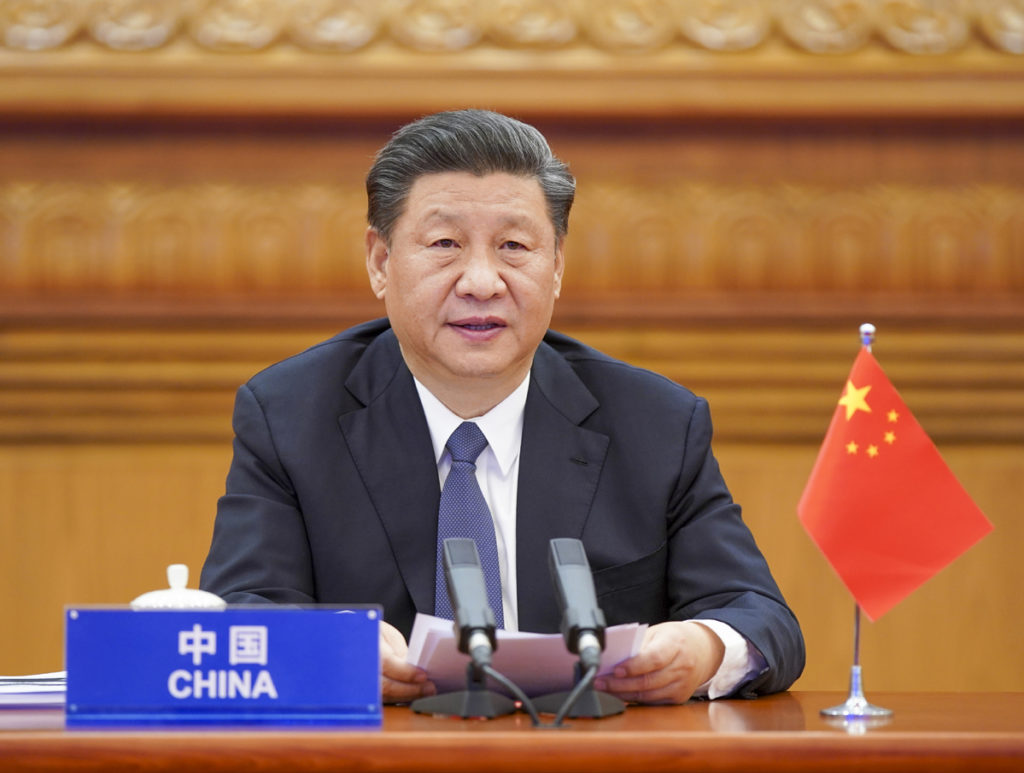
Amid the Covid-19 crisis, the G20 leaders interacted via video conferencing on Thursday. All the leaders were united and pledged to stop the spread of the Coronavirus by implementing and funding health measures that are needed.
The G20 leaders seemed very much concerned and discussed the ways to deal with the pandemic which has already taken lives of over 21,000 people.
To blunt the social and economic impact of the Covid-19 pandemic, the G20 leaders decided to inject USD 5 Trillion into the economy. The leaders shared the opinion that they should do whatever it takes to overcome the Corona crisis.
PM Modi at G20 Summit on Covid-19
King of Saudi Arabia convened the virtual G20 Summit, and PM Modi thanked him for his initiative and efforts.
While addressing the G20 leaders, PM brought to the notice the impact of the pandemic on the economy. Modi added that G20 countries account for the 80% of world GDP and 60% of world population, yet 90% of the COVID-19 cases and 88% of deaths due to Corona were in G20 countries. He emphasized on the need of a concrete action plan from G20 partners to fight Covid-19
"Let us put human beings rather than economic targets at centre of our vision for global prosperity and cooperation," PM Modi.
PM highlighted that human lives are more important than the economy. He wanted all the countries to share the benefits of medical research and development with other countries so that the entire humanity is benefited. He insisted on empowering the World Health Organisation (WHO) for the development of effective vaccines to deal with global pandemics.
PM hinted that the world may have a far-reaching social and economic impact due to the coronavirus outbreak. Therefore, he underlined and requested the G20 leaders to develop a new crisis management protocol to deal with a global health crisis.
Conclusion
It was anticipated that some G20 leaders may
discuss the Chinese origin of Corona but no nation discussed it. However to
deal with the Covis-19 crisis the spirit of all the leaders was of
collaborative approach.
All the G20 leaders, including Russian President Vladimir Putin,
and the US President Donald Trump agreed to contribute to the WHO-led COVID-19
Solidarity Response Fund on a voluntary basis.
Finally, a joint statement of G20 Leaders was issued at the end of the Summit. The statement called for a coordinated global response to fight the pandemic, adopting measures to safeguard the global economy, minimising trade disruption and steps to enhance global cooperation.
An unprecedented damage has already been done by the COVID-19 this year. The entire world is now facing the economic damage caused by the deadly virus.
The consequences of a combined health pandemic and a global recession will be catastrophic for many developing countries and halt their progress towards the Sustainable Development Goals - UN
The United
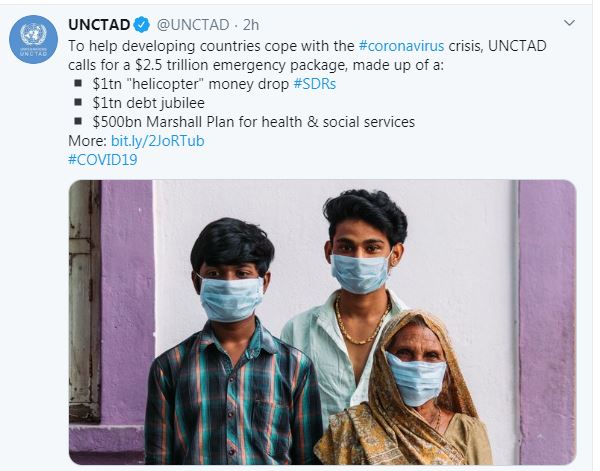
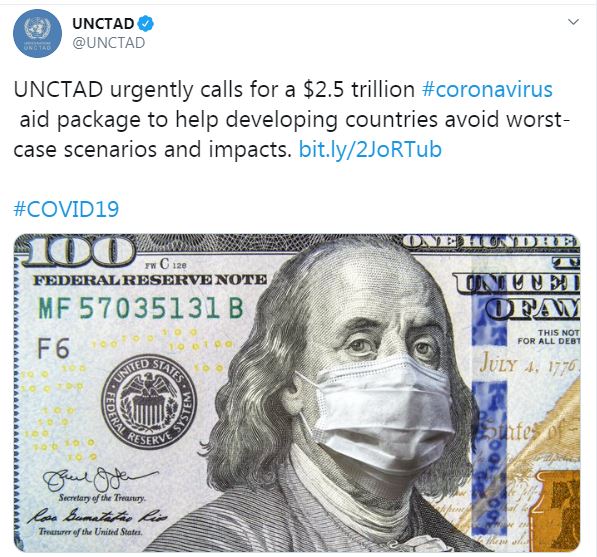
Nation (UN) is calling for a USD 2.5 trillion rescue package for the developing
nations out of which
$1 trillion should be made available through the expanded use of
special drawing rights
$1 trillion of debts owed by developing countries should be
cancelled this year
$500 billion needed to fund a Marshall Plan for health recovery
and dispersed as grants
According
to the new analysis from United Nations Conference on Trade and Development
(UNCTAD), the UN trade and development body titled ‘The COVID-19 Shock to
Developing Countries: Towards a ‘whatever it takes’ programme for the
two-thirds of the world’s population being left behind’, commodity-rich
exporting countries will face a USD 2 trillion to USD 3 trillion drop in
investments from overseas in the next two years.
According to the UN
report, Even so, the world economy will go into recession this year with a
predicted loss of global income in the trillions of dollars. This will spell
serious trouble for developing countries, with the likely exception of China
and the possible exception of India.