One stop online portal for Delhi informatiom. Know what is happening around you. Read news analysis on Indian Politics, current affairs, travel, sports, and much more.
Government of India is working in tandem with various departments to find ways to tackle Corona
Several Programmes already launched to spread Covid-19 awareness in India
Government has invited citizens, companies and academicians to come up with innovative ideas to control the spread
Science & technology (S&T) Core Team
Government of India has set up a Science
& technology (S&T) Core Team to coordinate efforts to tackle Covid-19
The government has decided to crowd
source innovative ideas and solutions from companies, academicians, and experts
to fight the menace of Covid-19.
The S&T Core Team headed by
Principal Scientific advisor will look into the ideas. It will further work on to
collaborate the ideas and will ensure the solutions reach faster to the public.
Prof K Vijay Raghavan, the Principal Scientific Advisor to the government wrote on Twitter.
“The seriousness of Covid-19 requires that we, as scientists, proactively work together to ensure synergy, develop implementable solutions that health-workers, communities need,”
“The efforts of our clinicians and health workers will benefit greatly by effective and speedy inputs from science, technology, and innovation (STI).”
Government of India has already taken
necessary steps to ensure that we are prepared well to face the challenge and
threat posed by the growing pandemic of COVID 19 – the Corona Virus.
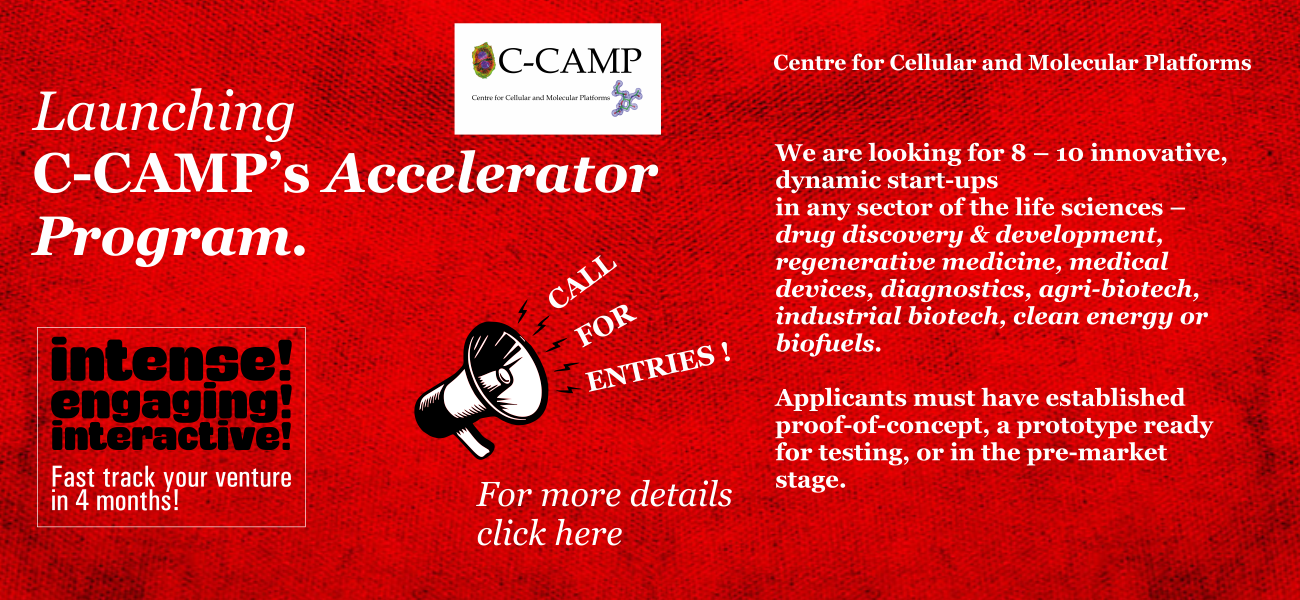
Cellular and Molecular Platforms (C-CAMP), is a special COVID-19 focused accelerator set up in collaboration with the United Nations Health Innovation Exchange (UNHIE) and Social Alpha. Amid Covid-19 pandemic, the C-CAMP is inviting Startups, innovators, and entrepreneurs who can help fight the pandemic. The Special Covid focused accelerator is also called “COVID-19 Innovations Deployment Accelerator” (CIDA)
Categories for Innovations
The innovations from the players should be under the categories of diagnostics, vaccines, screening, containment strategies, therapeutics, public health & other categories including but not limited to focused technologies. The following is the detailed list of categories:
mobile health technologies for screening and home care,
protective gear and sterilization innovations for care providers,
digital triaging tools and risk stratifying systems,
supply chain innovations,
AI systems to assist critical care,
low-cost ventilators and oxygen therapy units,
diagnostic kits and Point of Care tests,
volunteerism and service innovations and
scalable plug and play isolation units, treatment tents
C-CAMP Accelerator has shortlisted four promising
Innovations to deal with Covid-19
In an overwhelming response, C-CAMP has received over 150 submissions so far. As on March 29, 2020, the Pune based centre has already shortlisted four innovations. They are looking for innovations that are ready to deploy immediately and the ones which can also be used for the future.
According to a statement, the C-CAMP has set no specific last date to submit the applications. The received applications are being assessed daily in batches for scientific validity, market readiness, feasibility and impact. Certainly, the new innovations will help India fight the Coronavirus. Furthermore, the innovators will also get a platform to attract investors in the future.
With more than 1000+ positive cases in India, it becomes imperative for India to deploy out-of-the-box innovations to control the spread of Coronavirus. Therefore C-CAMP has come up with this idea of inviting innovations.
By assessing the innovations submitted by the innovators, CIDA will assist in fast-tracking the best and effective innovations for pilot scale deployment. Certainly, it will also help in facilitating regulatory pathway and assist in connecting with the investors.
“Few key players from industry are in constant touch with C-CAMP to support COVID-19 Innovations. CIDA is a step in that direction to help with immediate deployment of solutions wherever we can,” Dr Taslimarif Saiyed, C-CAMP CEO and Director
How to Submit your Innovation to C-CAMP
Accelerator
If you are a Startup, innovator, or an entrepreneur who can help fight the Pandemic submit your entry here.
C-CAMP is a major Platform Technology, Industry-Interaction, Innovation
and Incubator unit. Considering the vacuum that is present at the
interface of Academia and Industry, such an organization is much needed in the
country to be able to assure the success of scientific talent.
COVID-19 is not only impacting the health of the people worldwide but also has a more significant impact on the economy and travel industry mainly. It has taken a toll on every industry, but travel and tourism have been the worse hit. With no airlines operating throughout the world, and all of us should stay at home, going out on an expedition is a far thought.
Losses Incurred by the Indian Travel Industry
According to the World Travel and Tourism Council, about 50 million people may lose jobs in the travel and tourism industry.
The tourism industry accounts for about 10% of the total global GDP. It may take about 10 months for the industry to recover after the world recovers from this pandemic, which seems unlikely as of now.
Image Courtesy: Image by Richard Mcall from Pixabay
Moreover,
the stocks related to the travel and tourism industry dropped down by a
whopping 70% for this year in these few months.
With the suspension of domestic as well as international flights amid COVID-19, the Indian travel industry is being greatly affected.
In the
wake of the COVID-19 outbreak, WTTC has urged governments to follow certain
measures like:
Providing Fiscal support to global travel and tourism industries, and extending unlimited interest-free loans.
Inject liquidity and cash in the Travel and Tourism Industry
Protecting the livelihood of employees of the tourism sector
Measures that are taken by the Indian Government
Indian Government is also working for the best interest of the general public and the economy as a whole. Finance Minister Nirmala Sitharaman has announced a relief package amounting to 1.7 Lakh crores.
In addition to these measures, the (Reserve Bank of India) RBI, is providing three-month EMI relaxation on loan repayments so that the livelihood of the poor and middle segment can be secured amid COVID-19 pandemic.
Furthermore, RBI has also reduced the repo rate by 75 points, CRR by 100 points to free up liquidity. More relief packages for worst-hit sectors like the Travel industry are still worked upon by the government.
Some Suggestions
The measures mentioned above may not be enough therefore the government need to keep looking for better means to ensure COVID-19 pandemic doesn't take away the will to live.
Here are some of the suggestions by industry leaders and economists on the same:
SpiceJet CMD and WTTCII President Ajay Singh advised the government to urge domestic and international tourists to disseminate the message of 'Postpone Travel, don't cancel' on Incredible India website.
'For the first couple of months, this could potentially be handled through mandatory leave and leave-without-pay initiatives for 1-2 months' is stated by a CAPA report.
Apart from this, economists suggest getting rid of the pandemic quickly with 'Whatever-it-takes' approach. To prevent economic slowdown, governments need to focus on bringing bankruptcies down to ensure they have money. "This is the time to bring out the big artillery; this is not a time to be timid, but to do whatever it takes, fast." they said.
Other
measures may include tax relief, gaining from inheritance tax and
imposing relaxation on other taxes like buyback tax and Foreign Portfolio
Investment (FPI) can help out in balancing the economic slowdown and further
help the travel industry to recover.
Financial
and political commitments are the only reliable key to ensure the
revival of the tourism industry. UNWTO has joined hands with WHO and calls on
governments to include tourism as a priority sector in COVID-19 recovery
plans and actions.
African startups are on an upward fundraising trend in 2020 and global investors are taking note of it. Last year the amount of venture capital channelled into African opportunities surpassed the $725.6M raised in 2018 by nearly $500M.
Global Investors in African Startups
There were over ninety African companies that raised over a million dollars each in 2019, with Nigerian companies attracting the lion’s share of over $650 million.
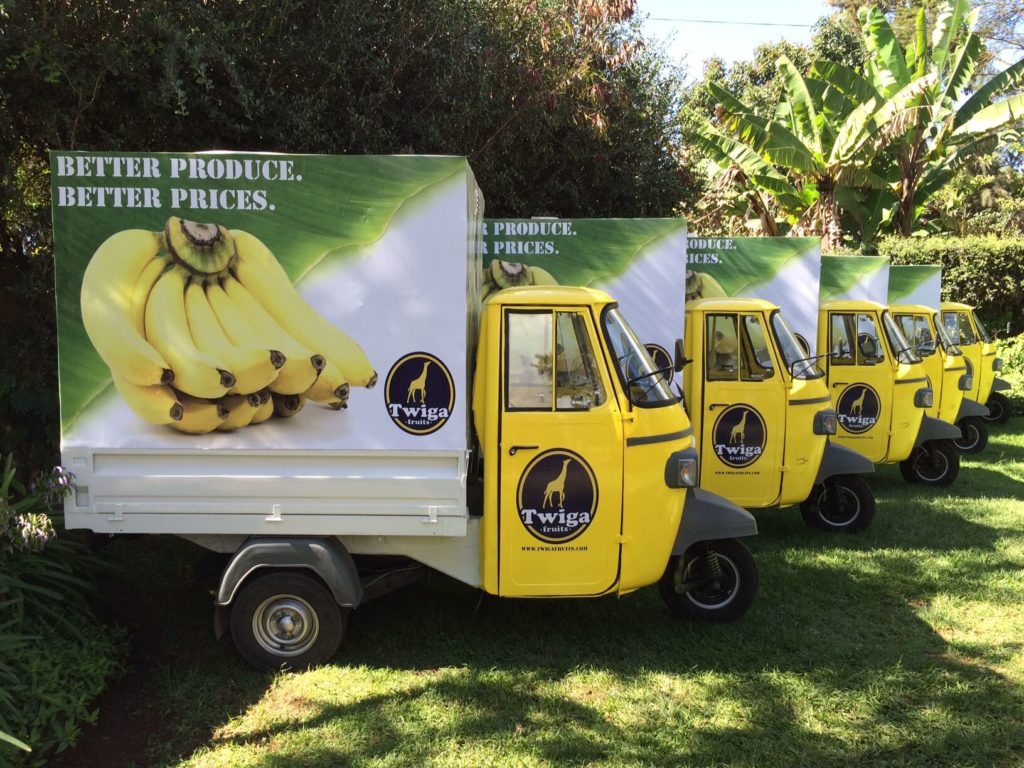
As these African start-ups mature, traditional players such as Goldman Sachs are investing, and large corporate venture arms and sovereign wealth funds are also beginning to circle. Twiga Foods, a Kenya-based food logistics startup, closed a $23.7 million Series B round led by Goldman Sachs, while Goldman also led a $20 million Series A funding round for Nigeria-based freight logistics company Kobo360. Both investments plan to support pan-African expansion.
The entrance of established players signals the growing maturity of Africa’s startup ecosystem as African companies are not only attracting global capital but require the sizable investments these investors desire.
As it did in India, Corporate venture capital (CVC) is also playing a key role in supporting the emerging startup ecosystem in African countries. There is a difference between a traditional VC or PE firm and a Corporate Venture Capital (CVC). The startups have an advantage from CVC funding. Because Unlike conventional VCs, Corporate venture capital gives more time to repay. As a result, the startups get more time to scale post-investment.
One of the bigger names in CVC, Visa has announced that it will buy a 20% stake in Nigerian firm Interswitch for $200 million.
GV also know as Google ventures and Toyota’s venture arm is also planning to invest African companies. Yamaha has shown interest in Nigerian motorcycle transit startup MAX.ng.
Furthermore the big corporate like Mastercard and Shell are also investing in African startups.
Asian Investments in African Startups
2019 also saw Asian entities entering into the African Startup ecosystem. Softbank one of the most prominent players in Asia participated in a $1.25 billion round of fundraising for Airtel-Africa. The telecom company Airtel-Africa is a subsidiary of Airtel India.
Opay, a mobile payments startup in Africa, owned by Chinese investor also raised $50 million in a Series A round from investors including Sequoia China.
Mobile phone device creator, Transsion, which operates in Africa and is owned by China, partnered with Kenya’s Wapi Capital to fund early-stage African fintech startups.
Apart from CVC and VCs, some sovereign wealth funds are also keen on investing in the African market. Abu Dhabi’s state fund is planning to invest $250 million through two funds focused on technology start-ups in the Middle East and North Africa.
Moreover, Qatar Investment Authority has also invested $200 million in the Airtel India subsidiary, Airtel-Africa
The African market has already seen a huge jump in fundraising from the established players giving a very positive sign for African. Jack Ma of Alibaba and Jack Dorsey of Twitter have recently visited the African countries. This has created a buzz among the African ecosystem as they are anticipating more investments in the coming years.
Africa is expecting more and more global investors and bigger players to invest in their companies. The ecosystem is expecting that the negative narrative that African companies are too risky for mainstream venture capital is changing now.
Green Agrevolution Pvt. Ltd, which operates agricultural technology startup DeHaat, has raised $12 million (around Rs 90.75 crore) in a Series A funding round.
Sequoia Capital India led the funding round, where the Dutch development bank FMO, also contributed. Omnivore and AgFunder, the existing investors, also participated in this round, a company statement said.
DeHaat is one of the fastest-growing startups in the Agri Tech sector. It offers end-to-end solutions and services to the farming community in India.
The company is also building AI-enabled technologies to revolutionize supply chain and production efficiency in the farm sector.
The Gurugram and Patna based company, presently has over 165,000 farmers in their service network. It aims to bring it to 5 million farmers by 2024.
Future Plans of DeHaat
Currently, DeHaat is helping thousands of farmers in securing various agri-input products, like seeds and fertilizers. The company also offers a tailored advisory to the farmers on the crop they should sow in a season.
Last year in March, the company raised a $4 million (around Rs 29 crore) in pre-Series A round, led by Omnivore and AgFunder.
"We are excited to partner with Sequoia India and FMO as we drive towards one million farmers on the DeHaat platform” Shashank Kumar, Co-Founder and CEO of DeHaat
The DeHaat platform is aggregating corn, wheat, rice, fruits, and vegetables from farmers on their network. It is also directly supplying to over 200 commodity bulk buyers, including retail chains, e-commerce players, FMCG giants, and SME food processors.
The company has plans to automate its supply chain and build the next layer of data analytics to drive further supply chain efficiency.
To improve its last-mile delivery, DeHaat, is also planning to open 2,000 rural retail centres. At the same time company has plans to upgrade the farm produce aggregation and to add farmers to its service network.
DeHaat
The alumni from IIT Delhi, IIT Kharagpur, IIM Ahmedabad, and alumni from other top institutes founded DeHaat 8 years ago.
Co Founders of DeHaat - Shashank Kumar, Amrendra Singh, Adarsh Srivastav, Shyam Sundar Singh, and Abhishek Dokania,
The company operating from Patna and Gurgaon is now a fully funded startup with a growth rate of 3-4x annually.